Inside the App
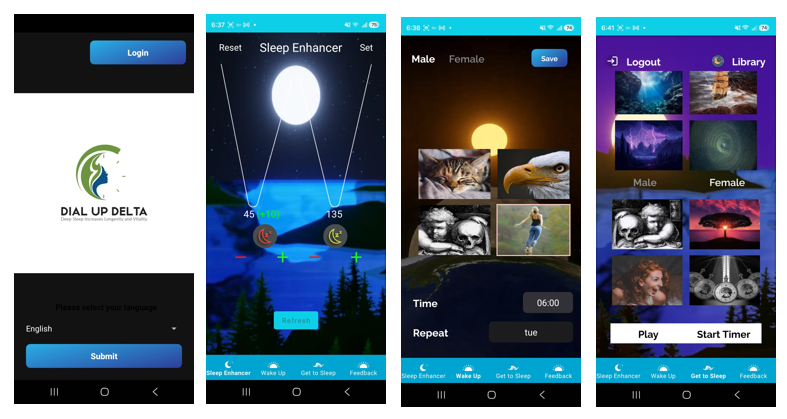
From sign-in to Sleep Enhancer, Wake Up Programs, and Get to Sleep
From Sign-In to Sweet, Deep Sleep
Your brain cleans itself in one stage of sleep — delta, and it naturally fades as you age. Dial Up Delta is built to help you get there and stay there longer: sound sessions engineered to boost delta wave activity, timed to the ~90-minute cycle your brain already runs on. No motion sensor, no all-night microphone — just the rhythm itself, and sound introduced at the moment your brain can actually use it.
Dial Up Delta is a sound and alarm app, not a medical device. It does not diagnose, treat, cure, or prevent any medical condition.
In 1513, the Spanish explorer Juan Ponce de León went looking for a spring that could stop time — a fountain, in a place, that would restore youth to anyone who found it. He never did. Four centuries of explorers after him never did either. That's because it was never a place to begin with.
"The Fountain of Youth
is a Time — Not a Place."
— Ponce de León, as imagined for Dial Up Delta
The closest thing science has found to what he was looking for isn't a location — it's a recurring window your body already enters most nights, for a few minutes at a time, whether you make use of it or not: delta sleep. It's when the glymphatic system does its clearing, when the day's wear gets repaired. Not a myth. Not a place you travel to. A time you can be more present for, tonight.
The illustration shows, conceptually, what researchers describe happening during delta sleep: increased cerebrospinal fluid movement through brain tissue, clearing accumulated metabolic waste — including Amyloid and Tau, the proteins most studied in connection with cognitive aging.
Two things are well established. First, sleep runs in roughly 90-minute ultradian cycles, moving predictably between lighter and deeper stages. Second, the sleeping brain filters out steady, unchanging sound through thalamic sensory gating — a real, published reason continuous white noise has limited effect once you're actually asleep.
Dial Up Delta doesn't try to detect your sleep stage with a motion sensor or an all-night microphone. It uses the predictability of the ultradian cycle to introduce sound within the window your brain is approaching or entering delta — sound that arrives as a change, which is what the gating research says the brain actually responds to.
Timing is only half the equation — delivery is the other half. The stimulus has to be loud enough to register without being loud enough to wake you, which a phone speaker across the room can't reliably control. That's why we recommend listening through a comfortable sleep headband: it isolates ambient noise and light, and it's the only practical way to get fine, consistent volume control close to the ear. It doesn't track or sense anything — it's a delivery mechanism, not a sensor.
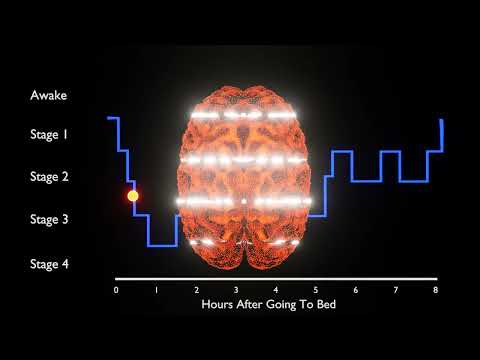
Sleep has four stages. The deepest — delta wave (slow-wave) sleep — is the stage most closely tied to the brain's own overnight maintenance work.
The glymphatic system, the brain's waste-clearing network, is overwhelmingly concentrated in deep delta sleep — cerebrospinal fluid movement that helps clear metabolic waste, including Adenosine, Tau, and Amyloid, is far higher here than in lighter sleep or waking.
The problem: delta wave sleep naturally and progressively declines with age. Beginning around 45, many adults get meaningfully less of it. Less delta plausibly means less overnight clearance — though the size of that effect in humans is still an active area of research, not a settled number.
Most sound machines play a constant, unchanging bed of noise all night. That's exactly the kind of stimulus the sleeping brain learns to filter out. Dial Up Delta takes a different approach — and unlike sensor-based sleep trackers, it doesn't need to watch you sleep to do it.
Delta is the slowest and deepest. The oscilloscope below shows their relative frequencies in real time — notice how much more slowly delta moves compared to the rest.
Slow-wave sleep isn't just about feeling rested. Researchers have found a real, bidirectional relationship between deep sleep and the buildup of amyloid-beta and tau — the proteins most associated with Alzheimer's disease and age-related cognitive decline: poor deep sleep is associated with faster buildup, and buildup further degrades deep sleep.
We didn't build Dial Up Delta because we can promise it prevents Alzheimer's or reverses cognitive decline — we can't, and we won't claim we can. We built it because deep sleep is one of the few levers you can pull yourself, tonight, without a prescription. If spending more time in delta sleep is good for your brain — and the research strongly suggests it is — a tool that helps you get there is worth having, independent of any single disease outcome.
Dial Up Delta does not diagnose, treat, cure, or prevent Alzheimer's disease, dementia, or any other medical condition. If you have concerns about memory, cognition, or a diagnosed sleep disorder, talk to a doctor.
Deep sleep is one of the few things you can act on tonight. See pricing and start your free trial.
Every night, your brain does this whether you use an app or not: it eases down through alpha into sleep, spends real time in delta, then climbs back up through alpha on the way to waking. That arc happens regardless. Dial Up Delta doesn't try to alter it — it shows up at the three phases already built into it: a message while you're still descending, delta stimulation introduced twice — a 30-minute window around 45 minutes in, and again around 135 — timed to the ultradian cycle your brain is already running on, and a message again on the way back up, paced to how long you want to stay there. Most sleep apps treat the night as one feature: fall asleep, maybe stay asleep.
This treats it as the sequence it already is — and puts something at every stage that does something.
Choose a soundscape, breathing exercise, or spoken relaxation program. Dial Up Delta offers two delta sessions per night, timed by default to 45 minutes and 135 minutes after you start your program — both adjustable (30–60 minutes and 120–150 minutes) so you can dial them in by trial and error, or against a separate wearable if you use one.
Sound played continuously all night is exactly what the sleeping brain habituates to and filters out. Dial Up Delta introduces its session within the window your brain is approaching or entering delta.
The session starts low and increases gradually rather than starting at full volume. It works with any earphones or bedside speaker, but we recommend a comfortable sleep headband — it blocks ambient noise and light and gives the fine, close-to-the-ear volume control needed to stay effective without crossing into an arousal.
The alarm fires at the clock time you choose — it isn't timed to your sleep stage, because without a wearable there's no reliable way to know what stage you're actually in when it goes off. What you can shape is how the wake-up itself unfolds: three pacing options stretch or compress the brief alpha transition between sleep and full alertness, from a quick rise to a longer, gentler one.
One tap, 1 to 5 stars, on how you slept. That rating, paired with which session played, its duration, and its timing offset, feeds a live optimization loop across age and gender — anonymized, never tied to your name or account. The configurations that work keep getting refined, and the ones that don't get replaced.
Help Us Refine This
We're testing original sound concepts at a specific, well-documented intersection — the descent from theta into delta — with far more people than a typical sleep lab ever reaches. If a session gave you your best night in a while, we'd love to know what led there. Reply with your gender, age range, and what you noticed — no name, no account, nothing identifying beyond that. It stays anonymous, and it directly shapes what we refine next.
Maximize time you otherwise only hope will be good.
Control your time in bed — sleep onset, cycle-timed delta reinforcement, and wake-up pacing.
Two kinds of audio prepare you for sleep. Soundscapes are ambient and can be stacked; voiced messages are spoken and play once. Every track runs exactly five minutes — and every voiced message is available in a male or female voice, in your choice of seven languages.
Play a few to wind down if you need to. Then set your drift-off: either one closing voiced message, or up to four soundscapes in any combination — four different ones, two played twice, or a single favorite looped four times.
This works the same way in reverse of your wake-up. As you drift down, before delta takes over, your mind moves through the same alpha window — which is why the voiced messages here are timed to arrive while you're easing toward sleep, not after you're already gone or still fully alert.

Stacking up to four soundscapes builds a window of up to twenty minutes with nothing left to tap. The system timer runs unattended, so you drift off without a screen pulling you back awake.

Eight bells strike midnight, then the long, even roll of the open sea.

Sink below the surface into still, weightless, blue-lit quiet.

A five-in, five-out cadence — about six breaths a minute, a slow pace long linked to a calmer, more parasympathetic state and steadier heart-rate variability.

Distant rolling thunder and steady rain moving through the trees.
Block the light, own the ears — your Sleep Enhancer works best with a headband like this. Any Bluetooth headphones work; a sleep headband is just more comfortable.

Prepare for the storm, then meet it with a settled, unshaken mind.

Quiet reassurance, spoken gently: right now, in this moment, all is well.

A few honest laughs to help the body ease out of the day and toward rest.

Slow guided suggestion to help ease you toward sleep — a full night, or a short afternoon nap.
Six sessions, one underlying goal: deepen and extend delta wave sleep. Red Original is the one grounded directly in a published study; the other five are original compositions we built from there, each taking a different approach. We label which is which rather than blur the line.

Modeled directly on findings from Ngo et al. (2013, Neuron), which found that closed-loop auditory stimulation timed to the sleep slow oscillation enhanced oscillation strength and declarative memory consolidation. Our most literature-grounded session.
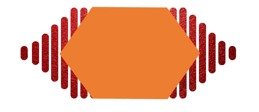
Combines the Red Original stimulus with a steady, low delta-frequency layer — an attempt to build on Red. Worth trying once you know how Red affects you.

Uses pink noise, a frequency associated with the brain's own resting state, to help ease neural activity toward deep delta and hold it there.
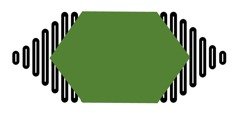
Uses binaural stimulation in an attempt to guide the brain from Theta (light sleep) further down into Delta (deep sleep).

Starts in Theta and eases toward Delta, then layers in a very slow frequency — roughly 0.1–0.5 cycles per second — in an attempt to deepen it further.

For nights Delta already comes easily — introduces the same slow, sub-1Hz-range frequency as Blue, aimed at coaxing it deeper still.
Delta sessions default to 45 and 135 minutes in, both adjustable — introduced within your expected delta window rather than playing continuously, and needing no sensor to work.
Works through any earphones or bedside speaker, but a sleep headband is recommended — it isolates ambient noise and light and gives the precise volume control needed to stay effective without waking you. It doesn't sense or track anything; it's just delivery.
The first words in your ear set the tone for everything after them. Seize the morning and you seize the day; seize your days and you seize your life. Each wake-up is a short spoken push in the direction you've chosen, delivered in the receptive minutes as you surface — the same programming idea as your wind-down, aimed the other way. Every wake-up program is available in a male or female voice, in your choice of seven languages.

Start on what's in your control and what isn't — the frame many rely on for steadiness under pressure.

An unhurried, settling start for anyone who'd rather ease into the day than be jolted into it.

A nudge toward moving your body and minding your habits before the day's easier choices crowd them out.

For the mornings you intend to win — full-tilt momentum from the very first minute.
You can't know which stage you'll be in when the alarm sounds — but you don't have to. Whatever stage you wake from, deep delta unlikely after six hours, light theta common and more so with age, the climb to full beta alertness always passes through the same brief bridge: alpha, the drowsy state on the brainwave chart above. That's the time. It's short, it's predictable, and it's the only window where a spoken message can actually land before your mind goes back to filtering things out.
The three wake-ups set the tempo across that alpha-to-beta hand-off — roughly a ⅓, ½, or ⅔ split — pacing how much of the morning message reaches you before you're fully up. It's a nuance, not a magic trick. But the first words in your ear steer the day, so every edge is worth having. It's included with every plan — not a separate purchase, and not something we've seen offered timed quite this way anywhere else.
Every spoken message on this app — wind-down or wake-up — is timed to land while your mind's usual filter is relaxed, not fighting through full alertness or already asleep. That's not an accident: it's the same alpha window, used on both ends of the night. Stoic resilience, calm, fitness, conquest — whichever tone you choose meets you at the one moment it's most likely to actually register, instead of bouncing off like the hundredth ad of the day. You won't find another app that lets you dial in how long that window stays open: three settings, no sensor, no separate purchase. It's already part of what you get.
You've seen the whole system — try your first night free.
"Sleep isn't downtime. Time it right, and it's the most productive nine hours of your day."Dial Up Delta
You've noticed your sleep isn't what it was. You want a non-pharmaceutical option worth trying before anything more involved.
You already track sleep with an Oura, Ultrahuman, Apple Watch, or Garmin. Delta timing varies by person and shifts further with age, so the defaults are a starting point, not a fit for everyone — dial the timing offsets in against what your own wearable already shows you, instead of relying on our defaults alone.
You want cycle-timed sound without an app tracking your motion or listening to your room all night. A headband for comfort and volume is fine — a sensor logging your bedroom isn't what you signed up for.
Every spoken sleep and wake-up program is available in your language.

Try it with just your phone and any earphones or speaker — no need to buy anything first. A comfortable sleep headband (~$15) is highly recommended for the fine volume control once you're ready to commit, but you can decide that after you've tried it.
A night, start to finish. You slip the headband on and choose what's going into your head tonight — Stoic Reflection, quiet calm, or a few honest laughs to loosen the day's grip. Your first delta session lands around 45 minutes in, on schedule. The second at 135. Sometime past six, your alarm fires at the clock time you set — Conquest, Health & Fitness, or that same Calm, whichever fits the morning — meeting you in the few minutes your mind can actually use it. Nothing about that night was left to chance. That's not a feature. That's the whole system — and it's already included.
3-day free trial · No credit card required to start · Cancel any time. Cancel within the first half of your billing period and you're eligible for a partial refund.
Download Dial Up Delta on Google Play. No sensor to set up — a comfortable headband and your phone are all you need.
On iPhone? iOS is targeted within 6 months. Let us know you're interested — it helps confirm the timeline.